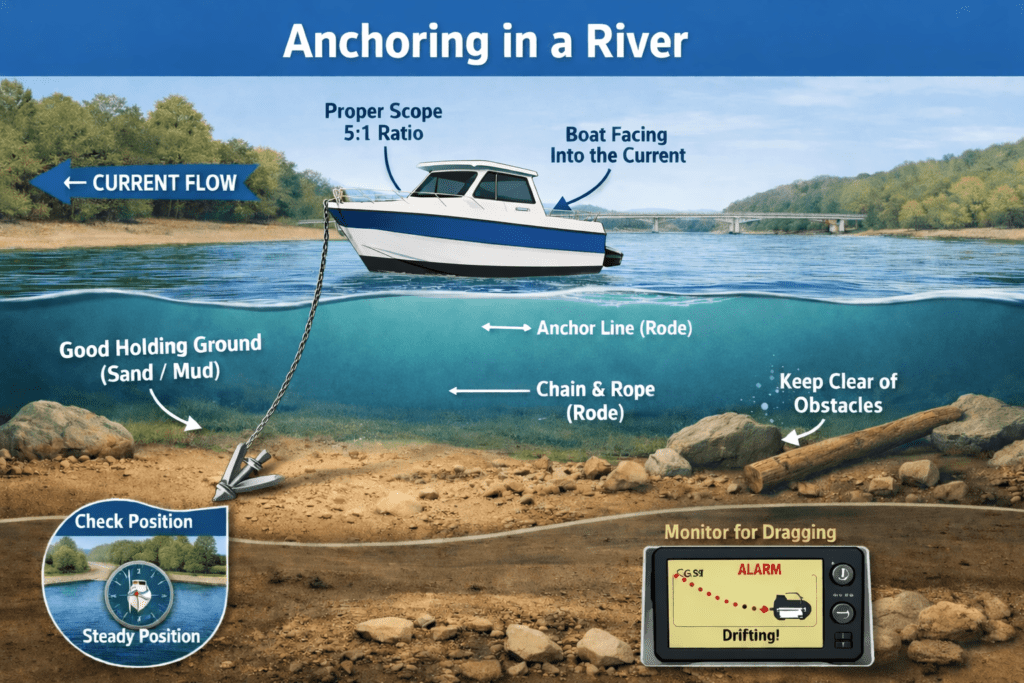
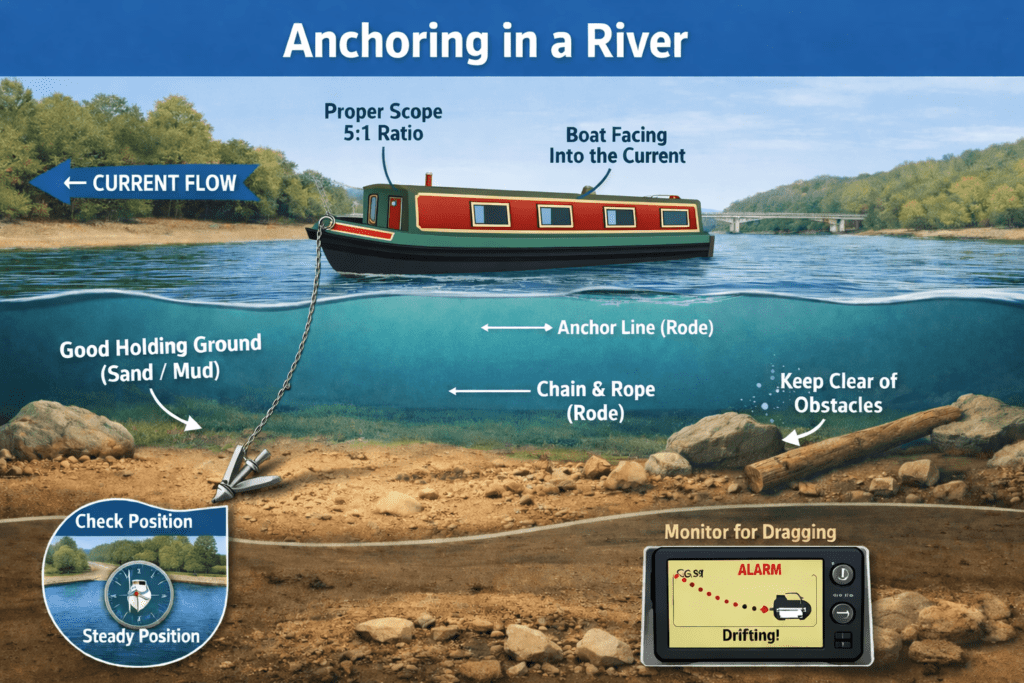
It’s perfectly feasible to navigate the whole stretch between Nottingham & York and never use an anchor, however, it’s always helpful to know if you do get into difficulty, how to use an anchor!
A Skipper’s Guide to Anchoring Safely in Rivers
Anchoring in a river requires careful judgement and preparation. Unlike still water, rivers introduce additional challenges such as current, changing depths, and passing traffic. The skipper is responsible for ensuring the vessel is secured safely at all times.
Understanding the River Environment
Before dropping anchor, assess the conditions around you. Take note of the current speed, water depth, and any changes in the riverbed. Be aware that river levels can rise or fall quickly due to rainfall or upstream activity, which can affect both depth and flow.
Look out for hazards such as submerged objects, moorings, bridges, and bends where visibility is limited. Avoid anchoring in narrow channels or areas with heavy traffic.
Choosing the Right Location
Select a position where the vessel can lie safely without obstructing other river users. Ideally, anchor in a wider, calmer section of the river with enough room to swing if conditions change.
Avoid:
- Main navigation channels
- Sharp bends or blind spots
- Areas near weirs, locks, or bridges
- Soft or heavily weeded riverbeds where anchors may not hold
A good holding ground, such as sand or mud, will improve the anchor’s effectiveness.
Preparing to Anchor
Before anchoring, ensure your equipment is ready:
- Check that the anchor, chain, and rope (rode) are in good condition
- Confirm you have sufficient length of rope for the depth and conditions
- Brief your crew on their roles and safety procedures
As a general rule, use a scope (ratio of rope length to water depth) of at least 4:1 to 6:1 in rivers, adjusting depending on current strength.
Deploying the Anchor
Approach your chosen spot slowly, heading into the current. This gives you better control of the vessel.
When ready:
- Lower the anchor steadily—do not throw it
- Allow the boat to drift back with the current as you release the rope
- Pay out enough line to achieve the correct scope
- Gently secure the line and allow the anchor to set
Once set, check that the vessel is holding position and not drifting.
Monitoring While Anchored
Anchoring is not a “set and forget” task. Continue to monitor:
- Your position relative to fixed points on shore
- Changes in water level or current strength
- Weather conditions
If you notice dragging (unintended movement), be prepared to reset the anchor immediately.
Safety Considerations
- Always keep a knife accessible in case the anchor line needs to be cut in an emergency
- Display appropriate lights or signals if anchoring in low visibility or at night
- Ensure the anchor line is clearly visible and does not pose a hazard to others
- Be ready to start the engine quickly if needed
Weighing Anchor
When it’s time to leave:
- Start the engine and move slowly toward the anchor
- Retrieve the line steadily while keeping it under control
- Break the anchor free by moving directly above it
- Secure the anchor properly before continuing your journey
In Summary
Anchoring safely in a river is about preparation, awareness, and ongoing vigilance. A well-anchored vessel not only protects those on board but also ensures the safety of others using the waterway.